

Energy prices across NSW, VIC and QLD continue to climb, even as more households invest in rooftop solar. While solar panels and solar panel system batteries are now common, many homeowners still wonder how to maximise solar savings beyond the installation itself.
The problem is simple. Installing solar alone does not automatically translate into lower power bills. How you use electricity inside your home matters just as much. Without the right appliance choices, a large portion of your solar energy savings still ends up flowing back to the grid.
This is where appliance upgrades after solar make a measurable difference as it is best to maximize solar savings Australia. By upgrading everyday essentials like hot water systems and air conditioning, households can dramatically increase solar energy savings and finally see their investment pay off.
Who This Guide is for?This guide is written for Australian homeowners who have already installed solar or are planning to and want to get the most out of their investment:
- Households with rooftop solar who are not seeing the expected reduction in electricity bills
- Homeowners considering upgrading appliances after solar installation
- Families using older hot water systems or inefficient heating/cooling setups
- Property owners looking to increase solar self-consumption instead of exporting energy to the grid
- Anyone trying to balance comfort, energy efficiency, and long-term savings
Solar & Batteries Are Just the First Step
Solar panels and solar batteries form the foundation of a low-cost energy setup, but they are not a silver bullet. Many Australian homes still rely on inefficient appliances that consume power at the wrong times or waste energy altogether.
Household energy use also varies by climate:
- QLD homes are cooling-heavy
- NSW homes see a mix of heating and cooling
- VIC homes are heating-dominant
To maximise solar savings Australia-wide, homes need to shift energy use into daylight hours and reduce total consumption. That means electrification and switching to energy saving home appliances designed to work with solar generation, not against it.
Hot Water Systems: The Hidden Energy Drain
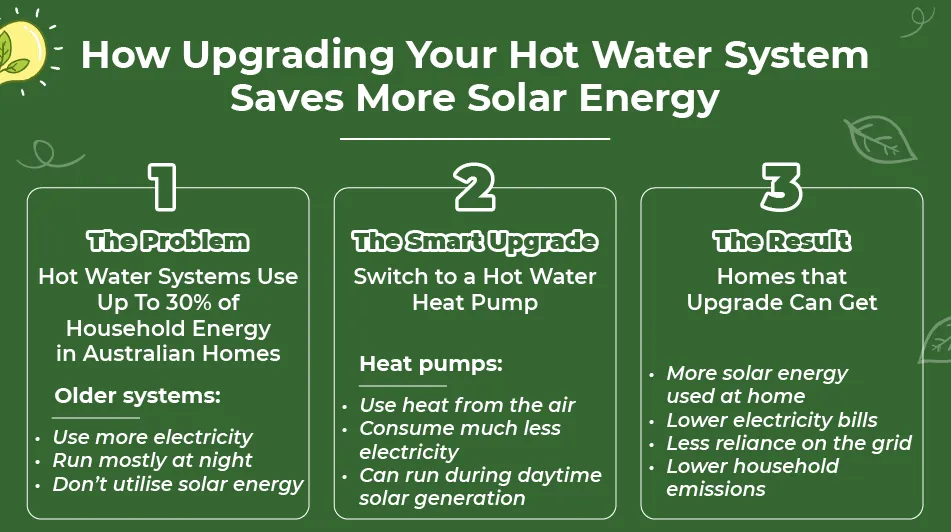
Hot water is one of the largest energy users in Australian households, often accounting for up to 30 percent of total electricity use. Older electric or gas hot water systems heat water inefficiently and usually run at night, when solar production is zero.
Upgrading to a hot water heat pump This equation completely changes because it is one of the top energy-efficient appliances.
Heat pump systems extract heat from the air and use far less electricity than traditional systems. When paired with solar, they can be programmed to run during peak generation hours, using free solar energy instead of expensive grid power.
For NSW, VIC and QLD households, this upgrade is one of the fastest ways to save energy bills after solar Australia-wide. It is also one of the most practical examples of appliance upgrades after solar that delivers immediate results.
Air Conditioning & Heating: Climate-Smart Comfort
Heating and cooling place heavy demands on solar households, especially during extreme weather.
- QLD homes benefit most from efficient cooling
- NSW homes need flexible systems for year-round use
- VIC homes rely heavily on heating performance
Modern inverter-driven air conditioner systems consume significantly less energy than older units. When operated during the middle of the day, they allow households to cool or heat their homes using solar generation instead of drawing from the grid.
This is where many homeowners miss out on additional solar savings. Running outdated systems at night wipes out the benefit of daytime solar production. Upgrading to high-efficiency air conditioning enables comfort without bill shock and plays a key role in how to maximise solar savings.
Why These Upgrades Maximise Your Solar Investment
Combining solar with the top energy-efficient appliances changes how energy flows through your home.
The benefits are practical and measurable:
- Higher self-consumption of solar energy
- Reduced reliance on energy retailers
- Faster return on investment
- Lower overall household emissions
Households that invest in energy saving home appliances consistently report better long-term outcomes than those relying on solar alone and also maximize solar savings Australia. This is the difference between owning solar and actually benefiting from it.
State-Based Rebates & Incentives
NSW
NSW offers energy-efficiency and electrification incentives that support appliance upgrades. Eligibility often depends on system type, household income and installation timing, making tailored advice essential.
VIC
Victoria has a strong focus on appliance upgrades and efficiency-based rebates. When combined with solar, approved upgrades can significantly boost solar energy savings.
QLD
Queensland incentives support energy-efficient home upgrades, and the state’s high solar output makes appliance upgrades particularly valuable. Running hot water and air conditioning during daylight hours delivers strong returns.
Rebate structures change frequently, so keeping details flexible ensures households can access the most up-to-date savings opportunities.
Financing & Upgrade Pathways
One of the biggest barriers to upgrading after solar is upfront cost. However, spreading expenses over time through finance options and combining rebates makes upgrades far more accessible.
Delaying upgrades often costs more in the long run. Homes that act early enjoy higher lifetime savings and better system performance. For households serious about how to maximise solar savings, timing matters.
Optimising Household Energy Use to Extend Solar Savings
Beyond upgrading hardware, daily usage habits play a critical role in increasing solar savings. Simple changes like scheduling hot water heating, running dishwashers and washing machines during peak solar hours, and pre-cooling or pre-heating the house in the afternoon can significantly increase solar self-consumption.
When combined with energy saving home appliances, these habits reduce exported energy and minimise grid reliance. For homeowners looking to increase solar savings Australia-wide, smart usage is the low-cost, high-return layer that often gets ignored but directly improves solar energy savings without additional infrastructure.

Conclusion: Turn Solar into Long-Term Savings
Solar panels and batteries are only the starting point. Real savings come from using energy smarter inside the home. Without efficient appliances, much of your solar power still goes unused.
By upgrading to hot water heat pumps, high-efficiency air conditioning, and other energy-saving home appliances, homeowners in NSW, VIC, and QLD can significantly boost solar self-consumption and cut power bills.
HiTech Eco Solutions supports this transition by providing tailored heat pump and air conditioning solutions designed to work seamlessly with solar systems. With experience across Australian climates, they help households maximise solar savings while improving everyday comfort.
If you want to save more after solar, reviewing your appliances and upgrading strategically is the next smart step. Book your system today and start saving your energy bills.
FAQs
Yes. Solar panels generate power during the day, but inefficient appliances often use electricity at night or consume more power than necessary. Upgrading to energy-efficient appliances helps households use more of their own solar energy, improving self-consumption and lowering electricity bills.
Yes. Many states including NSW, VIC, and QLD offer rebates or incentives for energy-efficient upgrades such as heat pump hot water systems and efficient heating or cooling appliances. These programs can significantly reduce upfront costs and improve the return on solar investments.
The savings depend on household energy usage, but upgrading key appliances like heat pumps and efficient air conditioners can significantly reduce electricity consumption. When combined with solar panels, many households see noticeably lower power bills and faster return on their solar investment.
A solar battery is not always necessary, but it can help store excess solar energy generated during the day for use at night. This reduces reliance on the grid and increases the amount of solar power used within the home.
To maximise solar savings, homeowners should:
- Use appliances during daytime solar generation
- Upgrade to energy-efficient appliances
- Consider installing a heat pump hot water system
- Run heating or cooling systems when solar power is available
- Use smart timers or energy management systems
These steps help increase solar self-consumption and reduce electricity costs.